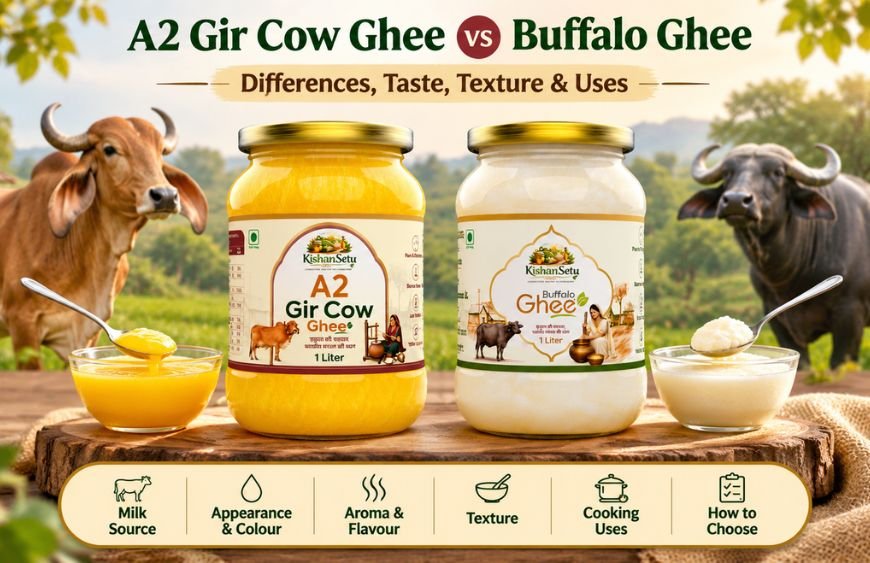
A2 Gir Cow Ghee vs Buffalo Ghee: Differences, Taste, Texture & Uses
Ghee has always held a special place in Indian kitchens. From adding a spoonful to hot dal and khichdi to preparing traditional sweets, this golden dairy product is an essential part of India’s food culture. However, when choosing ghee today, consumers often come across two popular varieties: A2 Gir Cow Ghee and Buffalo Ghee.
Both varieties are used in traditional Indian cooking, but they come from different dairy sources and can offer different characteristics in terms of colour, texture, aroma and culinary applications.
This raises an important question: A2 Gir Cow Ghee vs Buffalo Ghee – which one should you choose?
The answer depends on your taste preferences, cooking requirements, product quality and the kind of traditional ghee you enjoy using at home.
In this guide, we will explore the differences between A2 Gir Cow Ghee and Buffalo Ghee, including their sources, preparation methods, appearance, flavour, cooking applications and factors to consider before purchasing.
What Is A2 Gir Cow Ghee?
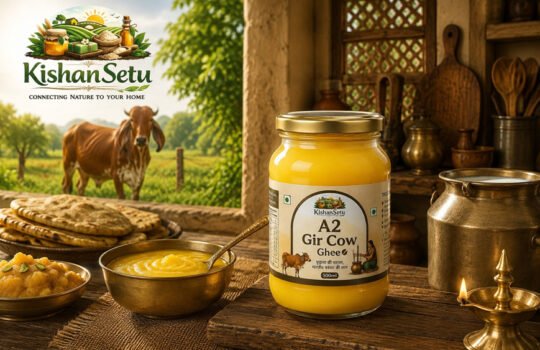
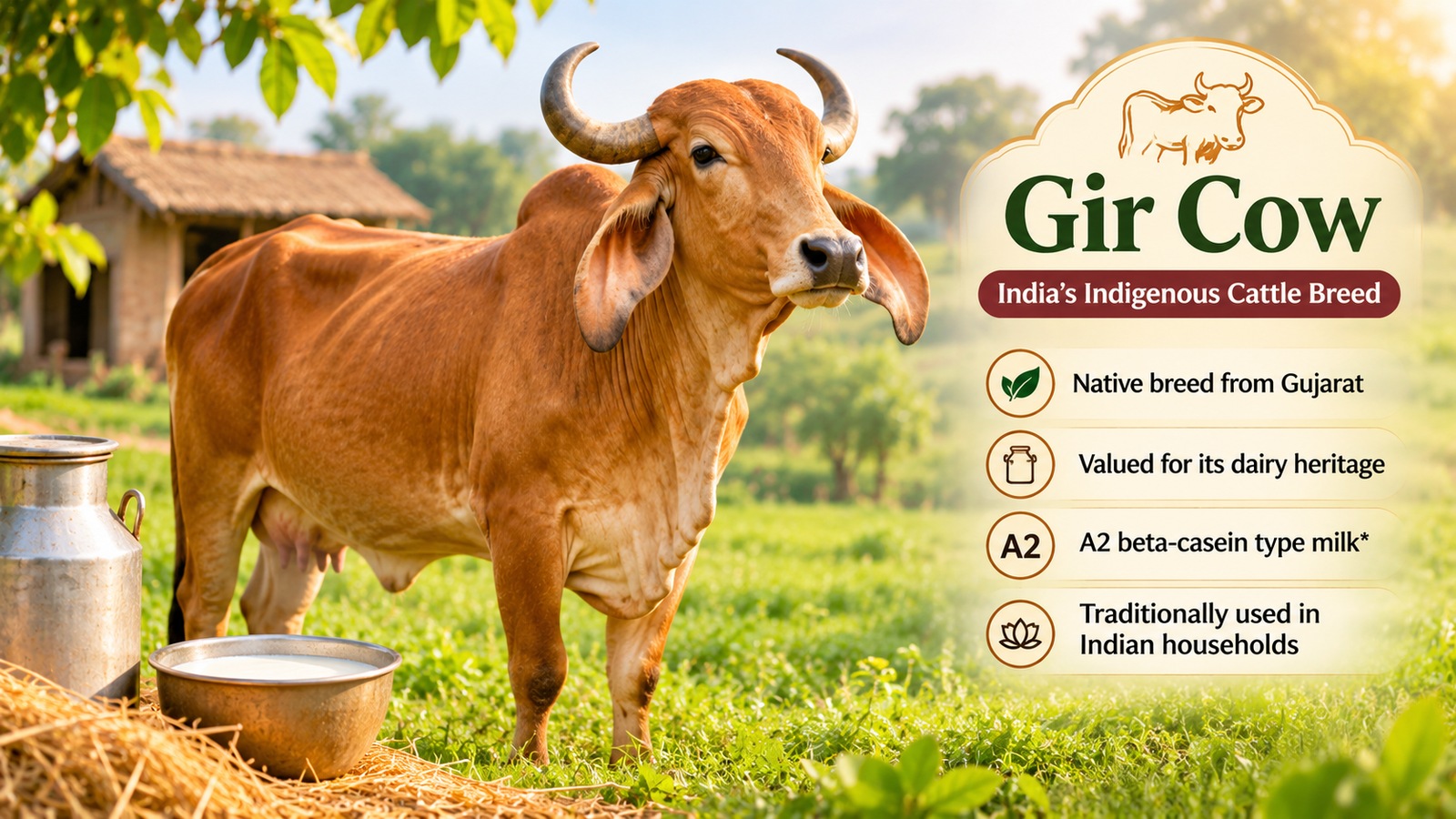
A2 Gir Cow Ghee is a type of cow ghee associated with milk obtained from Gir cattle, an indigenous cattle breed originating from Gujarat, India.
Gir cattle are traditionally valued for their dairy characteristics and their association with India’s indigenous livestock heritage.
The term A2 refers to a particular variant of beta-casein, a milk protein. The A2 classification is associated with the protein composition of the source milk, rather than the fat itself.
Ghee is produced by clarifying milk-derived fat, during which most water and non-fat milk solids are removed. Therefore, it is important not to assume that the A2 designation automatically establishes a special nutritional or medical advantage in the finished ghee.
A2 Gir Cow Ghee is particularly popular among consumers who appreciate indigenous Indian cattle breeds, traditional dairy products and the culinary heritage associated with Gir cows.
Key Characteristics of A2 Gir Cow Ghee
- Made from milk sourced from Gir cows.
- Associated with traditional Indian dairy practices.
- Generally has a yellowish or golden appearance, although the shade varies.
- Offers a characteristic dairy aroma.
- Can be used in everyday Indian cooking.
- Commonly associated with traditional ghee-making methods.
What Is Buffalo Ghee?
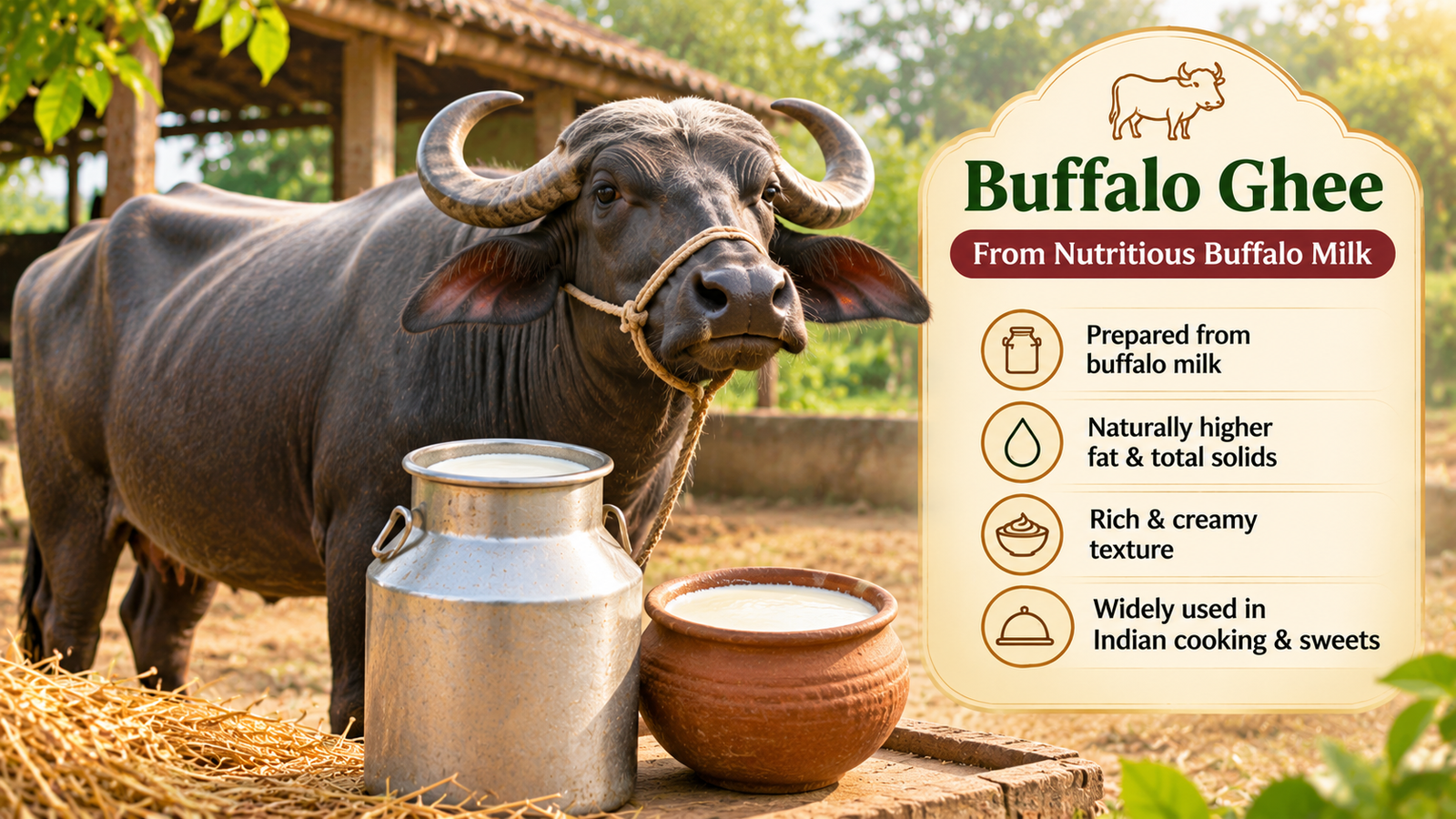
Buffalo Ghee is clarified milk fat prepared using buffalo milk or milk-derived ingredients such as cream or butter.
Buffalo milk is traditionally valued for its higher fat and total solids content compared with cow milk. This makes buffalo dairy products popular in several Indian households.
Buffalo ghee is known for its rich dairy character, creamy texture and distinctive flavour. Its appearance is often white to pale ivory, although colour can vary depending on the animal’s diet, processing conditions and other production factors.
It is widely used in Indian cooking, sweets, festive preparations and traditional recipes.
Key Characteristics of Buffalo Ghee
- Prepared from buffalo milk or buffalo milk-derived ingredients.
- Commonly has a white, ivory or pale appearance.
- Offers a rich and characteristic dairy flavour.
- Can have a firm or creamy texture depending on temperature.
- Suitable for various traditional Indian recipes.
- Commonly used in sweets, cooking and festive preparations.
A2 Gir Cow Ghee vs Buffalo Ghee: Key Differences
Although both products belong to the same dairy-fat category, their sources and sensory characteristics can differ.
Here is a practical comparison.
Comparison Factor | A2 Gir Cow Ghee | Buffalo Ghee |
Milk source | Gir cow milk | Buffalo milk |
Animal category | Indigenous cattle breed | Domestic water buffalo |
Appearance | Often yellowish or golden | Often white or ivory |
Aroma | Characteristic cow-milk ghee aroma | Rich dairy aroma |
Texture | May be granular or smooth | May be creamy or firm |
Flavour | Distinctive, often comparatively delicate | Rich and full-bodied |
Common applications | Dal, roti, rice, sweets | Sweets, parathas, rice, cooking |
Consumer preference | Those preferring Gir cow dairy products | Those preferring rich buffalo dairy products |
Note: These are general characteristics, not guaranteed specifications. Actual colour, aroma and texture depend on milk composition, animal feed, processing, storage and temperature.
1. Difference in Milk Source
The most fundamental difference between A2 Gir Cow Ghee and Buffalo Ghee is their milk source.
A2 Gir Cow Ghee
This variety is associated with milk from Gir cows, an indigenous cattle breed from Gujarat.
Consumers who value traditional Indian cattle breeds and regional dairy heritage may prefer this variety.
The A2 designation relates to beta-casein in the source milk. It should not be interpreted as proof of a particular health outcome from consuming the finished ghee.
Buffalo Ghee
Buffalo ghee is prepared from buffalo milk or its dairy derivatives.
Buffalo milk generally contains more fat and total solids than cow milk, although the actual composition varies according to breed, feeding, lactation stage and other factors.
This source difference contributes to the distinctive characteristics of buffalo dairy products.
2. Difference in Colour and Appearance
Colour is one of the first differences consumers may notice when comparing cow ghee and buffalo ghee.
A2 Gir Cow Ghee Colour
Cow ghee often has a yellowish or golden appearance.
This can be associated with naturally occurring carotenoid pigments in cow milk fat. The intensity of the colour may vary depending on the cow’s diet and production conditions.
Buffalo Ghee Colour
Buffalo ghee is commonly white, pale ivory or cream-coloured.
Buffalo milk contains lower levels of certain carotenoid pigments than cow milk, which contributes to its lighter appearance.
However, colour alone cannot establish purity or product quality. A reliable quality assessment requires appropriate product testing and manufacturing controls.
3. Difference in Taste and Aroma
Taste is a major factor when selecting traditional ghee for everyday cooking.
A2 Gir Cow Ghee
A2 Gir Cow Ghee generally has a characteristic cow-ghee aroma and flavour.
Many consumers enjoy its traditional dairy taste with:
- Freshly prepared roti.
- Dal and khichdi.
- Steamed rice.
- Traditional Indian sweets.
- Homemade parathas.
Buffalo Ghee
Buffalo Ghee is appreciated for its rich dairy flavour and distinctive aroma.
It can complement:
- Halwa.
- Laddoo.
- Puri and paratha.
- Traditional sweets.
- Rice preparations.
- Everyday Indian recipes.
Neither variety has a universally superior taste. Personal preference plays an important role.
4. Difference in Texture and Consistency
The texture of ghee can vary according to its fatty acid composition, crystallisation behaviour, processing and storage temperature.
A2 Gir Cow Ghee may develop a granular or smooth consistency.
Buffalo Ghee may also develop a creamy, firm or granular texture depending on the manufacturing method and temperature.
For this reason, texture should not be treated as the only indicator of quality.
A good purchasing decision should consider the product’s source, ingredients, manufacturing information, packaging and applicable quality standards.
5. Difference in Traditional Preparation Methods
Both cow ghee and buffalo ghee can be produced using different dairy-processing methods.
One traditional method is associated with the Bilona process.
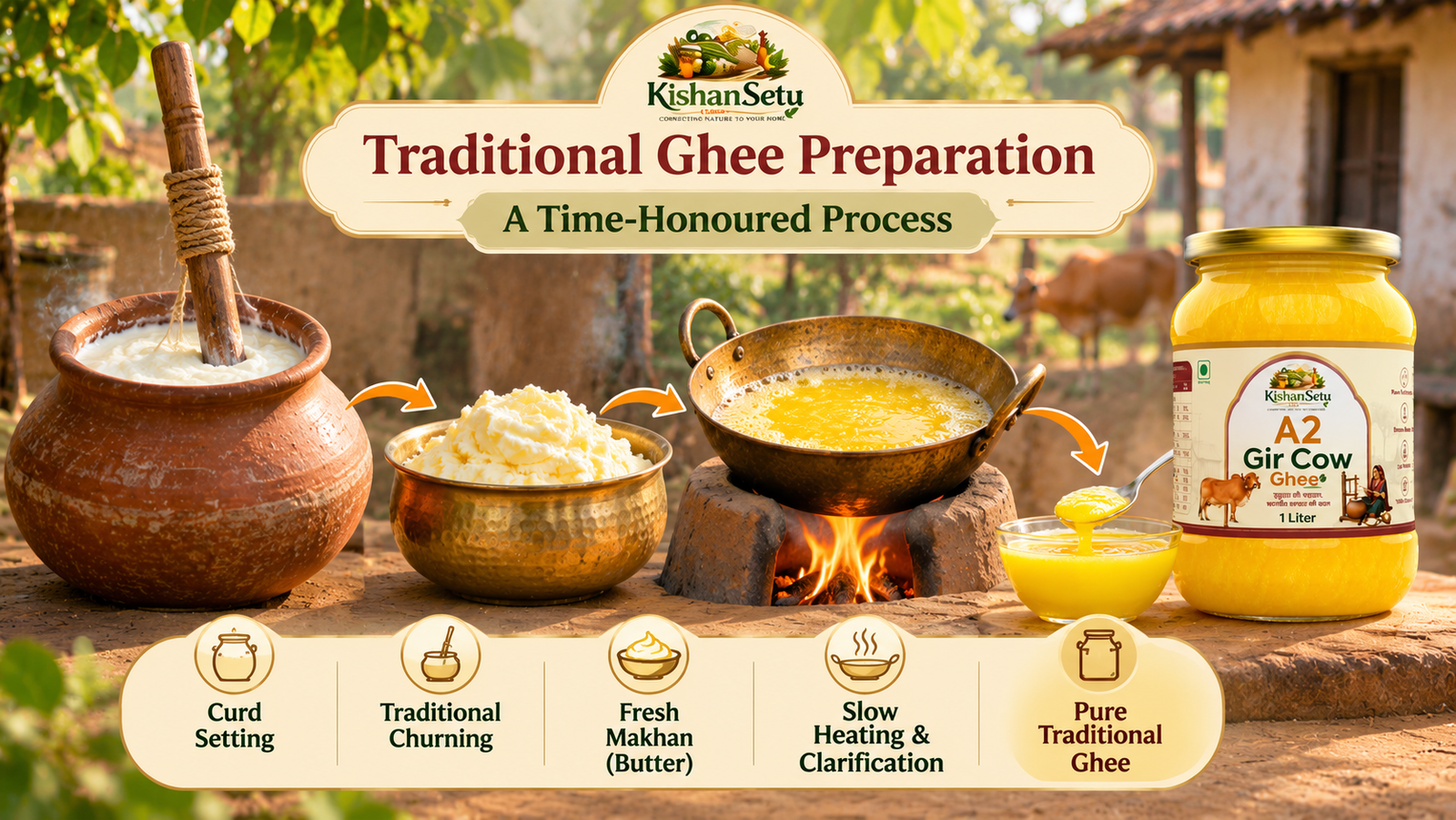
The process generally involves:
- Collecting milk from the dairy source.
- Preparing curd from the milk.
- Churning the curd to separate butter.
- Collecting the butter.
- Heating the butter to remove moisture and separate milk solids.
- Filtering and packaging the clarified fat.
The Bilona method is associated with traditional Indian dairy practices.
However, not every cow ghee or buffalo ghee product is made using this method. Consumers should check the actual manufacturing information provided by the brand.
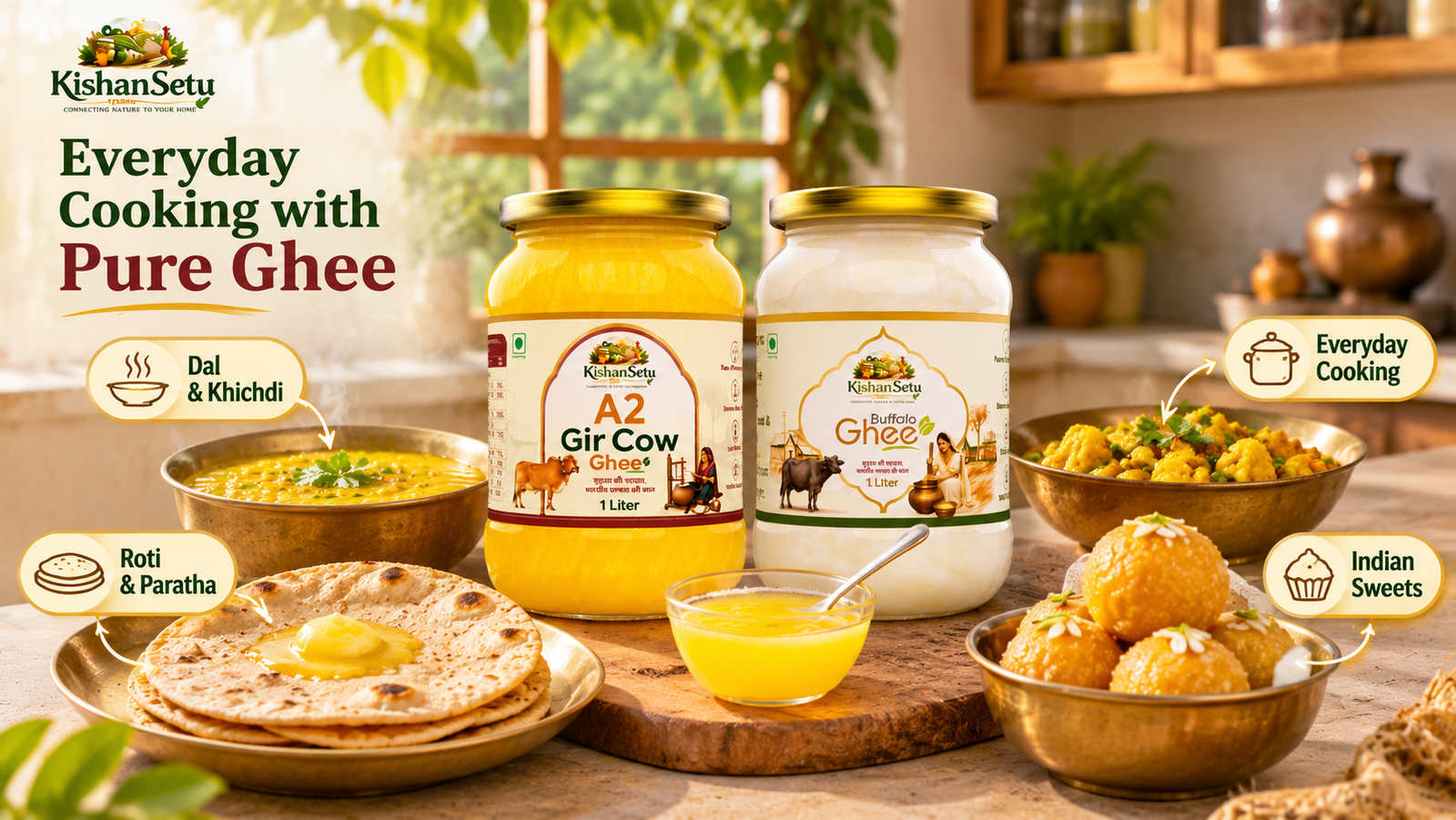
6. Which Ghee Is Better for Indian Cooking?
Both varieties can be used in Indian cooking. The best choice depends on the recipe and your flavour preferences.
A2 Gir Cow Ghee for Cooking
A2 Gir Cow Ghee can be used in:
- Dal tadka.
- Khichdi.
- Roti and chapati.
- Rice preparations.
- Traditional sweets.
- Homemade snacks.
Its characteristic aroma can complement familiar Indian dishes.
Buffalo Ghee for Cooking
Buffalo Ghee is suitable for:
- Halwa.
- Laddoo.
- Puri.
- Paratha.
- Festive sweets.
- Rich rice preparations.
Its rich dairy character makes it an appealing option for recipes where a pronounced ghee flavour is preferred.
Both products can be used in everyday cooking, subject to individual dietary needs and appropriate portion sizes.
7. Nutritional Considerations: A2 Gir Cow Ghee vs Buffalo Ghee
One common reason consumers compare these products is nutrition.
It is important to understand that both cow ghee and buffalo ghee are concentrated sources of milk fat.
Their exact nutritional composition can vary depending on the milk source, animal diet, processing and product formulation.
Both generally contain:
- Saturated fatty acids.
- Monounsaturated fatty acids.
- Smaller proportions of polyunsaturated fatty acids.
- Fat-soluble components naturally present in milk fat.
The proportions are not identical in every sample.
Does A2 Gir Cow Ghee Have More Health Benefits?
The A2 designation refers to beta-casein protein in milk. Ghee, however, consists predominantly of milk fat, with most non-fat milk solids removed during clarification.
Therefore, the A2 label alone should not be used to claim that finished ghee prevents disease, improves digestion or provides proven medical benefits.
Is Buffalo Ghee More Nutritious?
Buffalo milk generally contains more fat and total solids than cow milk. However, that does not automatically mean buffalo ghee is healthier or nutritionally superior.
The right choice depends on the complete nutritional composition, portion size and an individual’s dietary requirements.
What About Saturated Fat?
Both varieties contain saturated fat.
The Indian Council of Medical Research and National Institute of Nutrition dietary guidance recommends paying attention to total fat and saturated-fat intake.
People with specific health conditions or dietary restrictions should consult a qualified healthcare professional or registered dietitian.
A2 Gir Cow Ghee vs Buffalo Ghee: Which One Should You Choose?
There is no single answer for everyone.
Consider your preferences and cooking requirements.
Choose A2 Gir Cow Ghee If:
- You prefer ghee associated with indigenous Gir cattle.
- You enjoy the characteristic aroma of cow ghee.
- You value traditional Indian dairy heritage.
- You want ghee for dal, roti, rice and traditional recipes.
- You prefer the sensory characteristics of cow ghee.
Choose Buffalo Ghee If:
- You enjoy a rich dairy flavour.
- You prefer the characteristics of buffalo milk products.
- You regularly prepare traditional Indian sweets.
- You want a versatile dairy fat for cooking.
- You prefer its characteristic aroma and texture.
Ultimately, both varieties have a place in Indian kitchens. Your choice should be guided by product quality, taste, cooking requirements and dietary preferences rather than exaggerated health claims.
How to Identify Good Quality Ghee
With several ghee varieties available in the market, choosing a reliable product is important.
Here are some practical points to consider.
1. Check the Ingredient Information
Read the label carefully and check whether the milk source and ingredients are clearly mentioned.
2. Understand the Milk Source
If you are purchasing Gir Cow Ghee or Buffalo Ghee, look for clear information about the dairy source.
3. Check Manufacturing Details
A transparent brand should provide relevant manufacturing and product information.
4. Look for Appropriate Quality Standards
Check the applicable food safety requirements and relevant product specifications.
5. Check Packaging Quality
Choose properly sealed packaging that protects the product from contamination and deterioration.
6. Check Batch and Expiry Information
Look for manufacturing details, batch number, best-before date and applicable food-business identification.
7. Avoid Judging Ghee Only by Colour
Golden cow ghee is not automatically better than white buffalo ghee. Colour is influenced by several natural factors.
8. Choose Brands That Communicate Clearly
Look for brands that explain their sourcing, preparation and product characteristics without making unrealistic claims.
Discover Traditional Ghee with KishanSetu
At KishanSetu, traditional Indian food culture is at the heart of the product experience.
The brand offers two distinctive ghee varieties: A2 Gir Cow Ghee and Premium Buffalo Ghee.
Each variety offers a different dairy source and sensory experience, giving consumers the opportunity to choose according to their household preferences and cooking requirements.
KishanSetu A2 Gir Cow Ghee
For consumers who appreciate Gir cow dairy products and traditional Indian food culture, KishanSetu A2 Gir Cow Ghee is part of the brand’s ghee collection.
It is a suitable product to explore if you prefer the characteristic taste and aroma associated with cow ghee.
KishanSetu Premium Buffalo Ghee
KishanSetu Premium Buffalo Ghee offers another option for consumers who enjoy the rich dairy character associated with buffalo ghee.
It can be considered for everyday cooking, traditional recipes and festive preparations.
Explore the KishanSetu ghee collection to learn more about the available varieties and product details.
Frequently Asked Questions (FAQs)
1. What is the main difference between A2 Gir Cow Ghee and Buffalo Ghee?
The main difference is their milk source. A2 Gir Cow Ghee is associated with milk from Gir cattle, while Buffalo Ghee is made from buffalo milk or its derivatives. They can also differ in colour, aroma, texture and flavour.
2. Which is better, A2 Gir Cow Ghee or Buffalo Ghee?
Neither is universally better. A2 Gir Cow Ghee may appeal to consumers who prefer Gir cow dairy products, while Buffalo Ghee may suit those who enjoy its richer dairy flavour. Choose according to your preferences and dietary requirements.
3. Why is cow ghee generally yellow?
Cow ghee may appear yellow because of naturally occurring carotenoid pigments in cow milk fat. The intensity varies according to animal feed and other production factors.
4. Why is buffalo ghee usually white?
Buffalo milk generally contains lower levels of certain carotenoid pigments than cow milk. This contributes to the white or pale appearance commonly associated with buffalo ghee.
5. Can A2 Gir Cow Ghee be used for daily cooking?
It can be used in various everyday recipes, including dal, rice, roti and traditional preparations. However, portion size and overall dietary balance should be considered.
6. Can buffalo ghee be used for making sweets?
Yes. Buffalo ghee is used in several traditional Indian sweets and other preparations. Its flavour and texture can complement recipes such as halwa and laddoo.
7. Is A2 Gir Cow Ghee the same as Bilona Ghee?
No. A2 refers to a beta-casein protein variant associated with the source milk, whereas Bilona describes a traditional churning-based preparation method. A product should only be described as Bilona-made when its manufacturing process supports that claim.
8. Does A2 ghee contain A2 protein?
Ghee is predominantly milk fat, and clarification removes most non-fat milk solids, including most milk proteins. The A2 designation relates to the source milk rather than establishing a special protein content in the finished ghee.
9. How should ghee be stored?
Store ghee in a clean, dry, tightly closed container according to the manufacturer’s instructions. Use a clean, dry spoon and protect the product from moisture and contamination.
10. Can cow ghee and buffalo ghee be used interchangeably?
In many recipes, yes. Both can be used for cooking, roasting and traditional preparations. However, their flavour and texture may produce slightly different results.
Final Thoughts
The comparison between A2 Gir Cow Ghee vs Buffalo Ghee is not simply about deciding which variety is superior.
Both have a distinctive place in India's traditional food culture.
A2 Gir Cow Ghee is associated with indigenous Gir cattle and the characteristic qualities of cow ghee. Buffalo Ghee is appreciated for its rich dairy flavour and its versatility in Indian cooking.
The best choice depends on what you enjoy, how you cook and the product quality you expect.
At KishanSetu, both varieties reflect the continued appreciation of traditional dairy products in modern Indian homes.
Whether you prefer the characteristic taste of Gir Cow Ghee or the rich flavour of Buffalo Ghee, choosing a well-made, clearly labelled product is what matters most.
KishanSetu – Bringing Traditional Food Values to Modern Living.