How to Choose Pure A2 Cow Ghee in India: A Complete Guide to Purity, Quality & Traditional Bilona Ghee
Introduction
Ghee has always had a special place in Indian homes. From a spoonful added to hot dal and khichdi to traditional sweets, festive recipes and everyday cooking, ghee is much more than just a cooking ingredient. It is deeply connected with Indian food traditions and generations of culinary wisdom.
Today, A2 cow ghee has become increasingly popular among people looking for traditionally prepared ghee. Among the different options available, A2 Gir Cow Ghee made using the traditional Bilona method is particularly sought after by consumers who appreciate traditional Indian food practices.
But with so many products available in supermarkets and online stores, how do you know which ghee to choose?
Should you look at the colour?
Does the word “A2” guarantee purity?
What exactly is the Bilona method?
How important is the source of the milk?
And what should you check before buying a jar of ghee?
This guide explains the important factors to consider when choosing pure A2 cow ghee in India and why the source and traditional preparation method matter.
What Is A2 Cow Ghee?
A2 cow ghee is ghee made from milk associated with the A2 type of beta-casein protein.
In India, A2 cow ghee is commonly associated with indigenous cattle breeds. Gir cows, one of India’s well-known indigenous cattle breeds, are particularly associated with A2 milk-based products.
However, it is important to understand that “A2” and “Gir Cow” refer to different things.
- A2 refers to the type of beta-casein associated with the milk.
- Gir Cow refers to a specific indigenous cattle breed.
- Bilona refers to a traditional method of preparing ghee.
Therefore, when choosing A2 Gir Cow Ghee, it is useful to consider all three aspects rather than relying on just one word on the package.
Why Is the Source of Milk Important?
The quality of ghee starts with the milk used to make it.
If you are specifically looking for A2 Gir Cow Ghee, check whether the brand clearly states that the product is made from Gir cow milk.
Milk sourcing is an important part of understanding what you are buying. A transparent product should provide clear information about its source and preparation.
For consumers who prefer traditional Indian food products, knowing that their ghee is made from Gir cow milk can provide a stronger connection to the traditional food practices they are looking for.
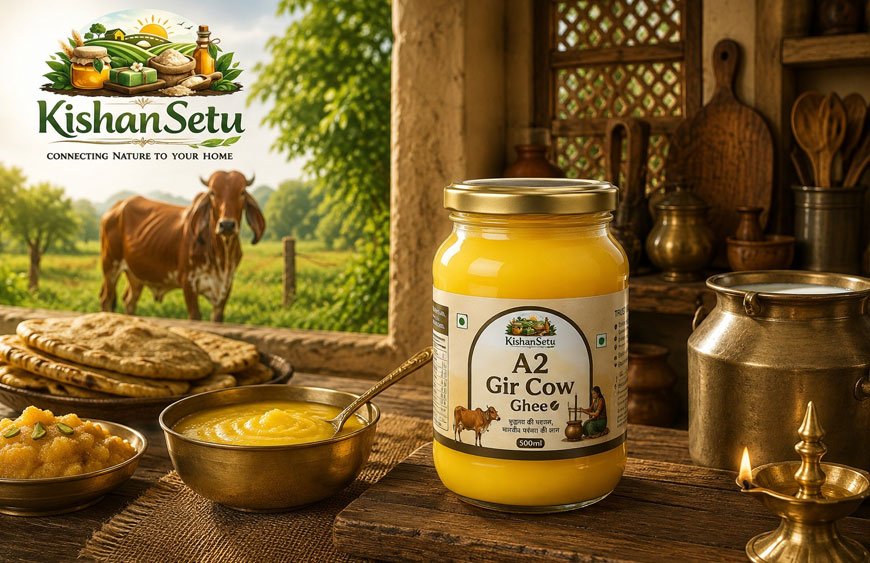
This is one of the reasons KishanSetu A2 Gir Cow Ghee focuses on Gir cow milk and traditional preparation.
What Is the Traditional Bilona Method?
The Bilona method is a traditional Indian method of preparing ghee.
Unlike processes that begin directly with cream separation, the traditional Bilona process involves several steps.
Traditional Bilona Process
Gir Cow Milk → Curd → Churning → Butter → Ghee
First, milk is converted into curd.
The curd is then traditionally churned to separate butter.
The butter is subsequently heated and clarified to produce ghee.
This traditional process has been practiced in Indian households for generations.
For people who value traditional food preparation, Bilona ghee represents a connection to this heritage.
Why Choose Bilona A2 Gir Cow Ghee?
When choosing ghee, many consumers look beyond the final product and want to understand how the ghee was made.
Traditional Bilona preparation is valued because it follows a process that starts with milk and involves curd formation, churning and butter clarification.
KishanSetu A2 Gir Cow Ghee is made from Gir cow milk using the traditional Bilona method, without added chemicals or unnecessary additives.
The result is traditionally prepared ghee with a rich aroma and characteristic taste that can complement a wide range of Indian dishes.
For families looking for pure A2 Gir Cow Ghee, KishanSetu offers a product that combines the heritage of Gir cow milk with the traditional Bilona preparation method.
7 Things to Check Before Buying Pure A2 Cow Ghee
1.Check the Milk Source
The first thing to check is the source of the milk.
If you are specifically looking for A2 Gir Cow Ghee, look for information about:
- Gir cow milk
- Indigenous cattle
- Milk sourcing
- Production practices
- Manufacturing information
A clear milk source helps you understand what you are purchasing.
KishanSetu A2 Gir Cow Ghee is made from Gir cow milk and prepared using the traditional Bilona method, making it suitable for consumers specifically looking for traditionally prepared A2 Gir Cow Ghee.
2.Look for the Traditional Bilona Method
The preparation method is another important factor.
If a brand claims that its ghee is Bilona, understand what that means.
The traditional process involves:
- Milk
- Curd formation
- Churning
- Butter separation
- Butter clarification
- Ghee
KishanSetu A2 Gir Cow Ghee follows the traditional Bilona approach, bringing an age-old Indian preparation method into modern kitchens.
However, remember that the word “Bilona” itself should not be treated as an automatic guarantee of purity. Always consider the complete product information.
3.Check the Ingredients
One of the simplest ways to evaluate packaged ghee is to read the ingredient information.
Pure ghee should have a simple ingredient profile.
When buying ghee, check for:
- Clear ingredient declaration
- Added oils
- Added fats
- Artificial flavours
- Unnecessary additives
- Manufacturer information
KishanSetu A2 Gir Cow Ghee is made from Gir cow milk using the traditional Bilona method, with no added chemicals or unnecessary additives.
A simple and transparent product approach makes it easier for consumers to understand what they are bringing into their kitchen.
4.Check the Product Label
Don’t make your decision based only on the front of the jar.
Turn the package around and check the complete product information.
Look for:
- Product name
- Ingredients
- Net quantity
- Batch number
- Manufacturing or packing information
- Date marking
- FSSAI information, where applicable
- Storage instructions
- Manufacturer/marketer details
- Customer-care information
A good food product should provide consumers with the information they need to make an informed choice.
5.Look at the Packaging
Good packaging helps protect ghee from environmental factors such as heat, moisture, air and excessive light.
Before buying, check whether:
- The container is properly sealed.
- The packaging is intact.
- There is no leakage.
- The container is suitable for food storage.
- Storage instructions are available.
After opening your ghee, always keep the container properly closed.
6.Don’t Judge Purity Only by Colour
One common misconception is that the colour of ghee alone can tell you whether it is pure.
This isn’t reliable.
The colour of ghee can naturally vary depending on factors such as:
- Milk source
- Cattle breed
- Feed
- Processing
- Temperature
- Storage
Similarly, texture can change depending on the surrounding temperature.
Therefore, golden colour, graininess or melting behaviour should not be treated as definitive proof of purity.
Instead, look at the source, ingredients, manufacturing process and product information.
7.Choose a Transparent Brand
The brand behind your ghee matters.
Before buying, consider whether the brand clearly communicates:
- What type of milk is used
- Where the milk comes from
- How the ghee is prepared
- What ingredients are used
- How the product is packaged
- How it should be stored
- Who manufactures the product
A brand that communicates clearly gives consumers greater confidence in their purchase.
With KishanSetu A2 Gir Cow Ghee, the focus is on bringing together Gir cow milk and traditional Bilona preparation to create ghee for modern Indian households.
A2 Cow Ghee vs A2 Gir Cow Ghee
The terms can sometimes be confusing.
A2 cow ghee refers to ghee associated with milk having the A2 type of beta-casein, while Gir cow ghee specifically refers to ghee made from milk of Gir cattle.
Therefore:
Term | Meaning |
A2 Cow Ghee | Ghee associated with A2 milk |
Gir Cow Ghee | Ghee made from Gir cow milk |
A2 Gir Cow Ghee | Ghee made from Gir cow milk associated with A2 milk |
Bilona Ghee | Ghee prepared using the traditional Bilona process |
Desi Cow Ghee | Ghee associated with indigenous/desi cattle |
When you see a product described as A2 Gir Cow Ghee made using the Bilona method, you should still check the manufacturer’s product information and label.
What Makes KishanSetu A2 Gir Cow Ghee Different?
For consumers looking for traditionally prepared ghee, the combination of Gir cow milk and Bilona preparation is an important part of the product story.
KishanSetu A2 Gir Cow Ghee is made from Gir cow milk using the traditional Bilona method, without added chemicals or unnecessary additives.
The process follows the traditional idea of transforming milk into curd, churning the curd to obtain butter and then clarifying the butter into ghee.
This gives the product its characteristic richness and aroma while keeping the focus on traditional Indian food practices.
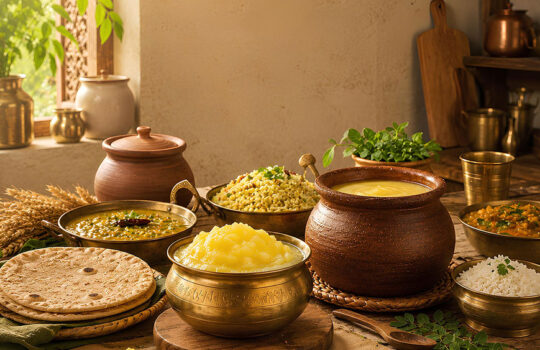
Whether you enjoy ghee with hot rotis, dal, khichdi, parathas, sweets or festive dishes, KishanSetu A2 Gir Cow Ghee can become a natural part of your everyday kitchen.
How to Use A2 Gir Cow Ghee in Everyday Cooking
Ghee is extremely versatile.
You can use KishanSetu A2 Gir Cow Ghee in a variety of traditional Indian preparations.
Dal & Khichdi
Add a small amount of ghee to hot dal or khichdi for a rich aroma and traditional taste.
Rotis & Parathas
A little ghee can be used while preparing or serving rotis and parathas.
Indian Sweets
Ghee is traditionally used in many Indian sweets such as ladoos, halwa and other festive preparations.
Rice & Pulao
A small amount can enhance the aroma and richness of rice-based dishes.
Festive Cooking
From traditional prasad preparations to festive recipes, ghee has long been part of Indian culinary traditions.
How to Store A2 Cow Ghee Properly
Once you’ve purchased your ghee, proper storage is important.
Keep the lid closed
Close the container properly after every use.
Use a clean and dry spoon
Avoid introducing water or food particles into the jar.
Keep away from excessive heat
Avoid storing the jar directly next to a hot stove.
Avoid direct sunlight
Store it according to the instructions provided on the product label.
Follow the manufacturer’s instructions
Always follow the storage conditions mentioned on your KishanSetu A2 Gir Cow Ghee packaging.
Common Mistakes to Avoid When Buying A2 Cow Ghee
Buying only because of the word “A2”
A2 is one characteristic of the milk. It shouldn’t be the only factor you consider.
Assuming golden colour means purity
Colour alone cannot prove purity.
Choosing only based on price
The cheapest option isn’t necessarily the best option.
Assuming Bilona automatically guarantees quality
Bilona describes a traditional preparation method, but you should still check the complete product information.
Ignoring the ingredient label
Always read the ingredient declaration before buying.
Buying from an unknown source
Choose a brand that provides clear product and manufacturer information.
How to Choose the Best A2 Cow Ghee for Your Family
If you’re comparing different A2 cow ghee products, use this simple checklist:
What to Check | Why It Matters |
Milk source | Helps understand the origin of the product |
Gir cow claim | Important if you specifically want Gir cow ghee |
A2 claim | Relates to the type of beta-casein associated with the milk |
Bilona method | Indicates the stated traditional preparation process |
Ingredients | Helps identify what is actually in the product |
Packaging | Helps protect product quality |
Labelling | Provides important product information |
Brand transparency | Helps you make an informed purchase |
Storage instructions | Helps maintain product quality |
If these factors are clear and satisfactory, you can make a more informed decision.
Why Traditional Ghee Still Matters Today
Modern lifestyles have changed dramatically, but many traditional Indian foods continue to remain relevant.
Ghee is one such food.
The traditional preparation of ghee reflects generations of Indian culinary knowledge. The Bilona process, in particular, connects modern consumers with an older way of preparing dairy products.
Products such as KishanSetu A2 Gir Cow Ghee aim to bring this traditional food culture into contemporary households.
It is not simply about buying another jar of cooking fat.
It is about appreciating the source, process, taste and tradition behind the food.
Frequently Asked Questions About A2 Cow Ghee
What is pure A2 cow ghee?
A2 cow ghee generally refers to ghee made from milk associated with the A2 type of beta-casein. Consumers should evaluate the product’s source, ingredients, processing method and labelling before purchasing.
What is A2 Gir Cow Ghee?
A2 Gir Cow Ghee refers to ghee made from Gir cow milk associated with the A2 type of beta-casein.
KishanSetu A2 Gir Cow Ghee is made from Gir cow milk using the traditional Bilona method.
What is the Bilona method?
The Bilona method is a traditional process where milk is converted into curd, the curd is churned to obtain butter, and the butter is then clarified to make ghee.
Is KishanSetu A2 Gir Cow Ghee made using the Bilona method?
Yes. KishanSetu A2 Gir Cow Ghee is made from Gir cow milk using the traditional Bilona method, without added chemicals or unnecessary additives.
How can I identify pure ghee?
Check the ingredient declaration, source information, manufacturing details, packaging, regulatory labelling and brand transparency. Colour and texture alone cannot definitively prove purity.
Is Gir cow ghee the same as A2 ghee?
Not exactly. Gir refers to a cattle breed, while A2 refers to a type of beta-casein associated with milk. A product can be described as both A2 and Gir cow ghee.
Can I use A2 Gir cow ghee for everyday cooking?
Yes. Ghee can be used in many traditional preparations, including dal, khichdi, rotis, parathas, rice dishes and Indian sweets.
How should I store KishanSetu A2 Gir Cow Ghee?
Keep the container properly closed, use a clean and dry spoon, avoid moisture and excessive heat, and follow the storage instructions provided on the product packaging.
Final Checklist Before Buying Pure A2 Cow Ghee
Before you buy your next jar, ask yourself:
✅ Is the milk source clearly mentioned?
✅ Is the Gir cow source clearly stated if claimed?
✅ Is the A2 claim clearly communicated?
✅ Is the preparation method explained?
✅ Is the Bilona method mentioned where applicable?
✅ Is the ingredient list simple and clear?
✅ Are there unnecessary additives or chemicals?
✅ Is the packaging intact and properly sealed?
✅ Is the manufacturer identifiable?
✅ Are appropriate regulatory details available?
If these factors are clear, you're better equipped to choose a ghee that matches your preferences.
Final Thoughts
Choosing pure A2 cow ghee in India doesn't have to be difficult.
Instead of choosing a product only because of its packaging, colour or marketing claims, take a closer look at the milk source, preparation method, ingredients, packaging and brand transparency.
If you're looking for traditionally prepared ghee made from Gir cow milk, KishanSetu A2 Gir Cow Ghee brings together the heritage of Gir cow milk and the traditional Bilona method.
Made from Gir cow milk. Traditionally prepared using the Bilona method. No added chemicals or unnecessary additives.
From everyday meals to festive celebrations, bring the richness of traditional Indian ghee to your kitchen with KishanSetu A2 Gir Cow Ghee.